#196 From Rajas to Sattva: Lessons on Rest, Control, and Letting Life Unfold
Reflections from the Bhagavad Gita, Vipassana, and the practice of releasing outcomes
We are now more than halfway through our studies of the Bhagavad Gita, and I am so glad that I led this course.
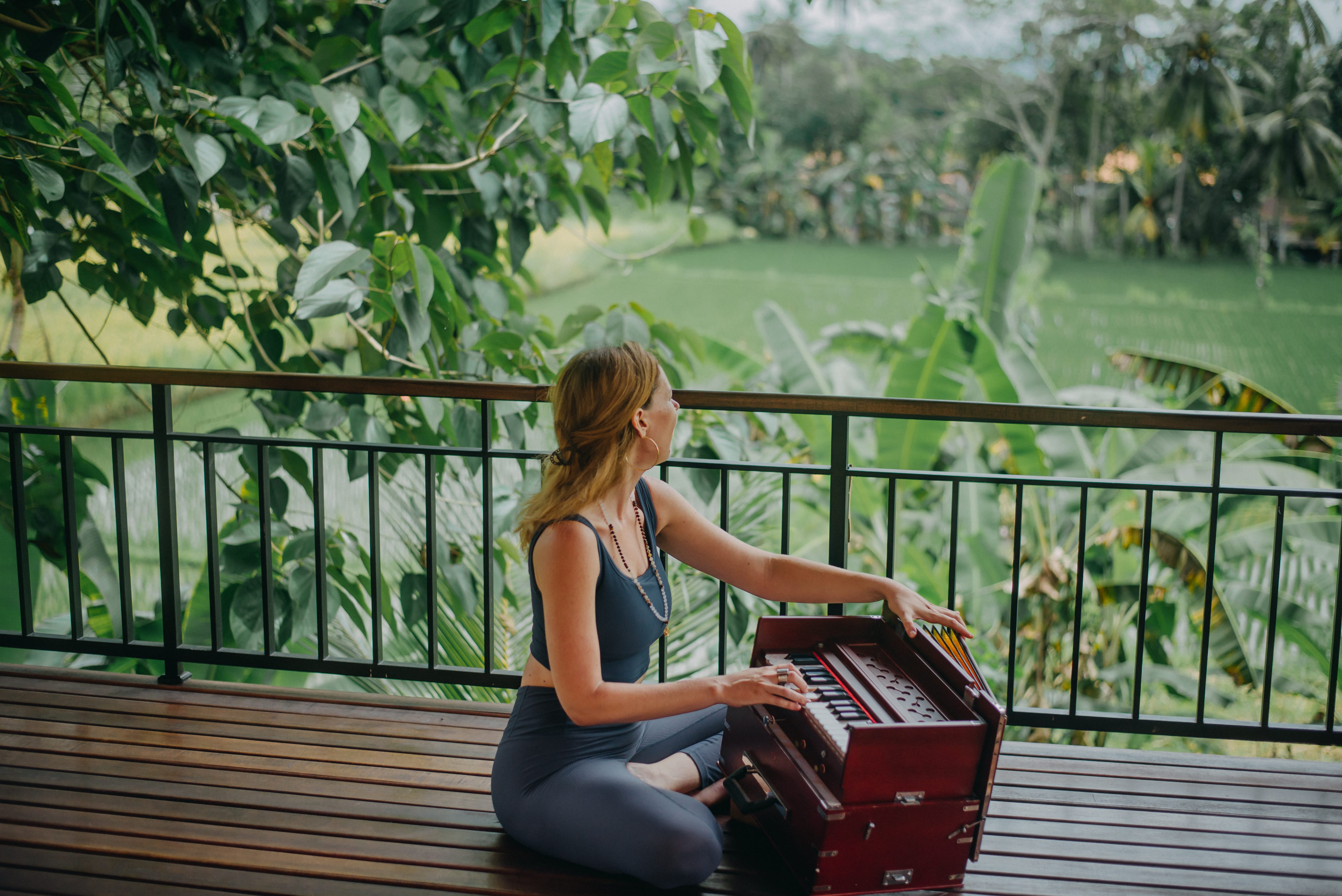
We meet every Tuesday morning. I’ve been teaching Yoga Philosophy online for about four years, but mainly Patanjali’s Yoga Sutras. This year I’m teaching the Gita, and integrating a lot more meditation practice into the academic classes. The reason why is because I believe that the knowledge of yoga philosophy can’t actually have an impact if we’re not in practice. I did this very well for years - I basically memorized Patanjali’s Sutras, but was I actually meditating every single day in that time?
So our class is 2 hours long, because we do a 15-minute check-in, a 20-minute silent meditation, and then I often offer a song that connects to the weekly theme. Then we discuss the readings at hand.
I go into the class having already meditated for an hour, so that I can be already grounded. So 20-minutes with the students is just icing on the cake! :)
I will always be a Patanjali’s Yoga Sutras girl at heart. I love this philosophy immensely because it impacted and changed my life so deeply when I first learned it - and the learnings continue to unfold every time I circle back to them. But studying other yogic texts and seeing how they intersect brings a fresh perspective and deeper awareness to the teachings that have shaped my life.
(By the way, I’ve decided what our next philosophy studies will be after the Gita concludes in mid-April. We will be studying the key teachings of the Buddha Dharma over eight weeks, on Tuesday mornings Bali time - Wednesday nights North America. You can’t book yet, but save the idea and know that it’s coming!)
My life has been unfolding in miraculous ways ever since I attended my Vipassana retreat in December. It changed me on a cellular level.
If you haven’t yet done a Vipassana, I highly recommend it at some point in your life. It is a 10-day silent meditation course based on the teachings of the Buddha, where you meditate for eleven hours a day, with no outside communication — no Instagram, no writing, no reading.
It was the hardest thing I have ever done in my entire life.
In the first three days, I fell asleep sitting up.
What I think this signifies is how deeply I needed rest. Before this, I don’t think I had ever allowed my body to rest to that degree in my entire life. Even on vacation, I am still working. Even on yoga retreats and trainings, I am still talking, still interacting, still learning. This was the opposite of this. The goal was not to receive but to empty. Not to add more but to release.
It was the opposite of what our culture glorifies. Our culture glorifies being busy. In yogic philosophy, this is the guna of rajas.
One of the chapters from today’s teaching on the Gita was about the three gunas:
Sattva: equilibrium, clarity
Rajas: activity, restlessness
Tamas: inertia, heaviness
I shared how I used to speak about bipolar disorder as if it were something I was.
Now I see it differently.
I see it as manifestations of the gunas.
I was often in rajasic and tamasic states. I was striving for sattva — equilibrium. I believe my diagnosis was a self-fulfilling prophecy. I thought that because I had this diagnosis, that was all I’d ever be. Now I’m aware while it was very real, it wasn’t a diagnosis I was stuck with. It was just a trauma response. I didn’t know or have the tools yet for wellbeing that I have now, to bring myself from rajas to satva or from tamas to satva. I didn’t know how to intervene and change the trajectory of each day, of each week, to move it towards peace or sattva. This is something I am still working on. It’s a daily project. (I share a lot about this journey in my book, Sober Yoga Girl.)
As the Vipassana course progressed, I began experiencing memories from my childhood and teenage years that I had never consciously recalled before.
I think we stay busy so we don’t have to untangle the stories and emotions locked within us.
In yoga, this storehouse is called the karmshaya — the repository of our past impressions.
Everyone has one.
I wanted to control this. I wanted it to stop. It’s was overwhelming when I suddenly remembered things I said or did or other people said or did at age four, at age thirteen, at age twenty-one…etc. But I was stuck at Vipassana, with nowhere to go but be with it. Nothing to do but be with it. I think this is one of the reasons we keep ourselves so busy in the modern day: why we use social media, why we are addicted to our devices. Because it keeps us busy. And then we never have time to open up these cupboards and drawers, which are sometimes messy and unpleasant to sort through.
In the belief of yoga, you will continue being reborn again into the suffering of human experience until you resolve everything that’s left in your karmashaya (from this lifetime and the past ones). So that’s why we have to sit down, we have to get still, and we have to get curious. Otherwise we’ll keep repeating the same patterns, the same suffering, the same stories, the same problems.
While writing this part of the Substack, a memory just appeared for me of this scene from Holes… which articulates well how I felt on the 6th or 7th day of Vipassana:
“I’m tired of this Grandpa!”
“Well that’s too damn bad. You’ve gotta keep digging.”
I was thinking today about how arriving in Bali was the time when everything really fell apart for me internally.
Someone once said to me that my life in Bali must be easy, because we don’t have “real-world problems.”
But in my experience, arriving in Bali was when I could no longer blame anything external.
I couldn’t blame my job.
I couldn’t blame my relationship.
For years I had said:
I’ll be happy when I get to Bali.
I’ll be happy when I run my business full-time.
I’ll be happy when I travel.
And then suddenly, I arrived here and started running my business full time and travelling and I realized — and I couldn’t blame anything external anymore.
I had to face the truth:
The suffering was coming from within. So I had to start digging.
Our culture glorifies being busy, and for years I believed there was some kind of award for it.
I haven’t had weekends in more than ten years.
I became the queen of stacking things side-by-side — appointments, meetings, calls, classes. The queen of saying yes. “How much more can I take on?”
Even during leading Yoga Teacher Trainings, I would schedule calls before and after classes, juggle multiple programs, and constantly push myself.
But recently, I’ve realized something simple and profound:
I am at my best when I am rested.
When I create space.
When I have fewer balls to juggle.
When I overfill my schedule, I push myself into rajas — and create unnecessary suffering.
This realization has led to some important decisions.
Today, I cancelled my Bahasa Indonesia class so I could create space before my first kirtan at Sayuri’s, which is happening tonight and I am so excited for it! (I also was supposed to be hosting the English class at my villa for a couple of the Mindful Bali staff - but they also coincidentally ended up cancelling too). In these classes being cancelled, I created an afternoon of silence for myself. I’m more and more seeing my need for quiet.
One of my teachers shared that he always meditates before leading kirtan, and I realized I needed that same spaciousness, so that I am not carrying my own energies into the space and into the evening. I went to pilates, I meditated, and then I sat down and wrote this Substack. Something I wouldn’t have time for if I were busy in classes today.
Another way I’m reducing my busy-ness: I also made the decision to close my shala while I am in India.
At first, I had elaborate plans to keep it open — training Dayu to teach, organizing subs, managing everything remotely.
And then I realized:
This was the last thing I wanted to carry while away. I want my life to be more simple, not more chaotic. More satvic, not more rajasic.
So I let it go.
I am also simplifying my commitments during YTTs, and creating more space for presence instead of constant output.
Space for stillness.
Space to keep digging.
This week, I did a craniosacral healing session that brought a powerful realization:
I am deeply attached to control.
I want everything to work out perfectly.
I want people to have a great experience.
I want events to be successful.
I want people to be happy.
I want outcomes to unfold in specific ways.
But this attachment is what creates suffering. Because ultimately we are not in control. A higher power is in control. Things are just unfolding for us. And we’re going along for the journey.
A friend recently messaged me:
“I hope everything on the India retreat happens for the highest good of all.”
And I realized:
That is enough. Just the faith and trust that everything that is happening is for the highest good of all. And that’s all I can do.
The Serenity Prayer says:
God, grant me the serenity to accept the things I cannot change,
the courage to change the things I can,
and the wisdom to know the difference.
This realization is especially present for me tonight.
Tonight is my first kirtan at Sayuri’s.
I noticed how badly I wanted it to be a success. I wanted to sell lots of tickets. I wanted lots of people to come.
And then I saw clearly:
That is me wanting control. But I can’t control how many people attend. I can’t control if I break even or make a profit or lose money. So I just have to give it to God.
Instead of praying for an outcome, my prayer is that the people will be there who need to be there, what will happen will meant to be happen, and it will lead me to where I need to be next. So here’s a prayer that feels relevant:
Universe, put me in the places you want me to be,
with the people you want me to be with,
doing the things you want me to do.
Thank you for the joys and the challenges of my life.
Amen.
Upcoming Offerings
• Next Bali Bhakti Series begins March 9. (Earlybird price before Feb 20th is $255!) Join us.
• June Yoga Teacher Training has one spot remaining. Join us here.


I can totally relate to what you’re sharing. As a die-hard control freak and action-oriented person, I found Vipassana incredibly confronting, to be honest. I was shocked by how much we suppress in daily life just by staying busy. Your writing is a beautiful reminder to make space for that stillness again in my daily life.
Reminds me of the step prayers from AA ❤️